Making Rain Check
Four decisions took the courier from a single image to a street you can walk.

Start with what the robot is doing
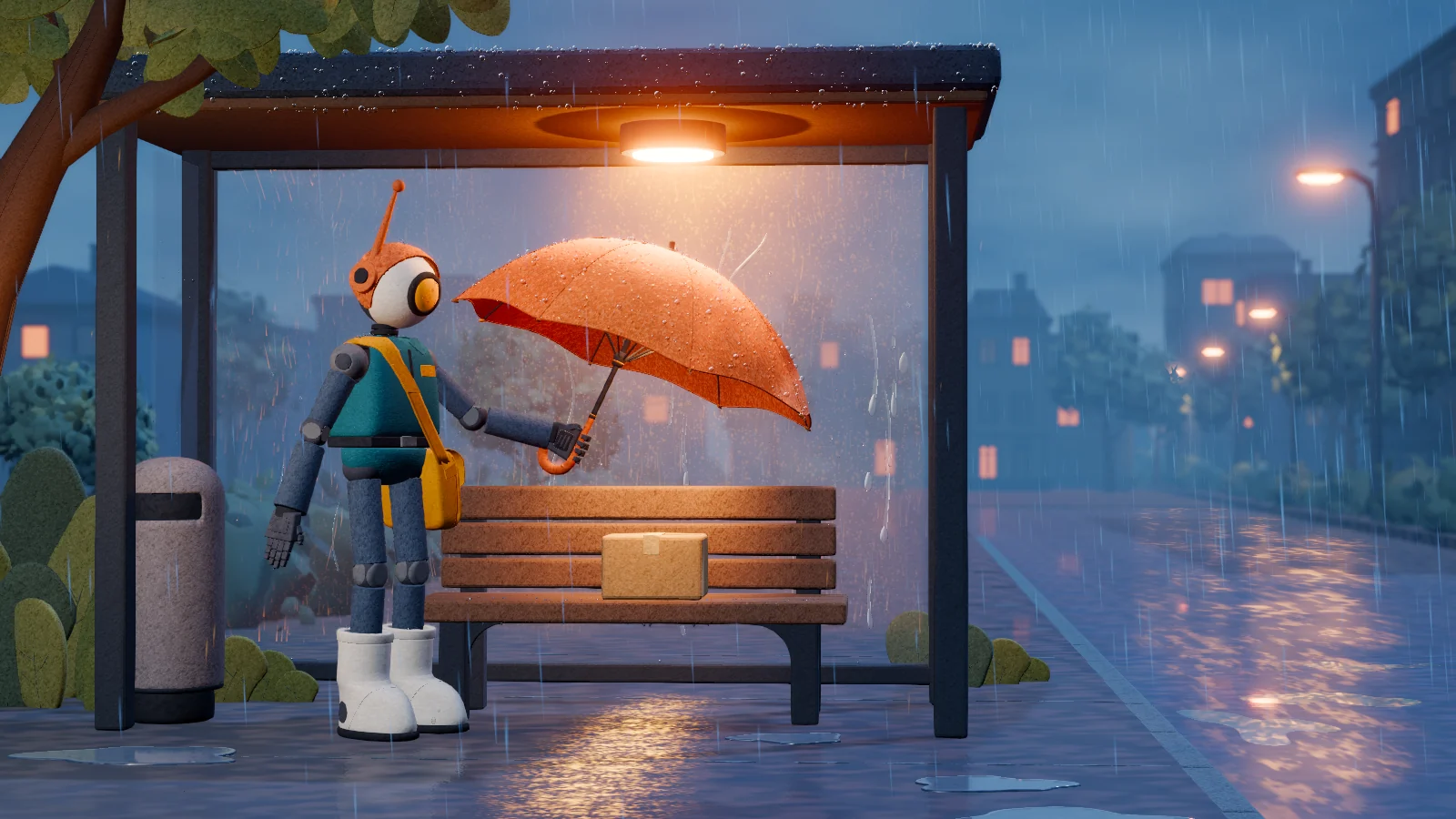
MiniMax H3 produced the original concept image. Look at where the umbrella lands. The robot stands to one side so the parcel gets the driest spot on the bench.
That gesture gave the 3D scene its layout. The lamp had to reach the parcel, the hand had to reach the umbrella, and the camera had to see all three without losing the wet street behind them.
Give the felt a cut edge
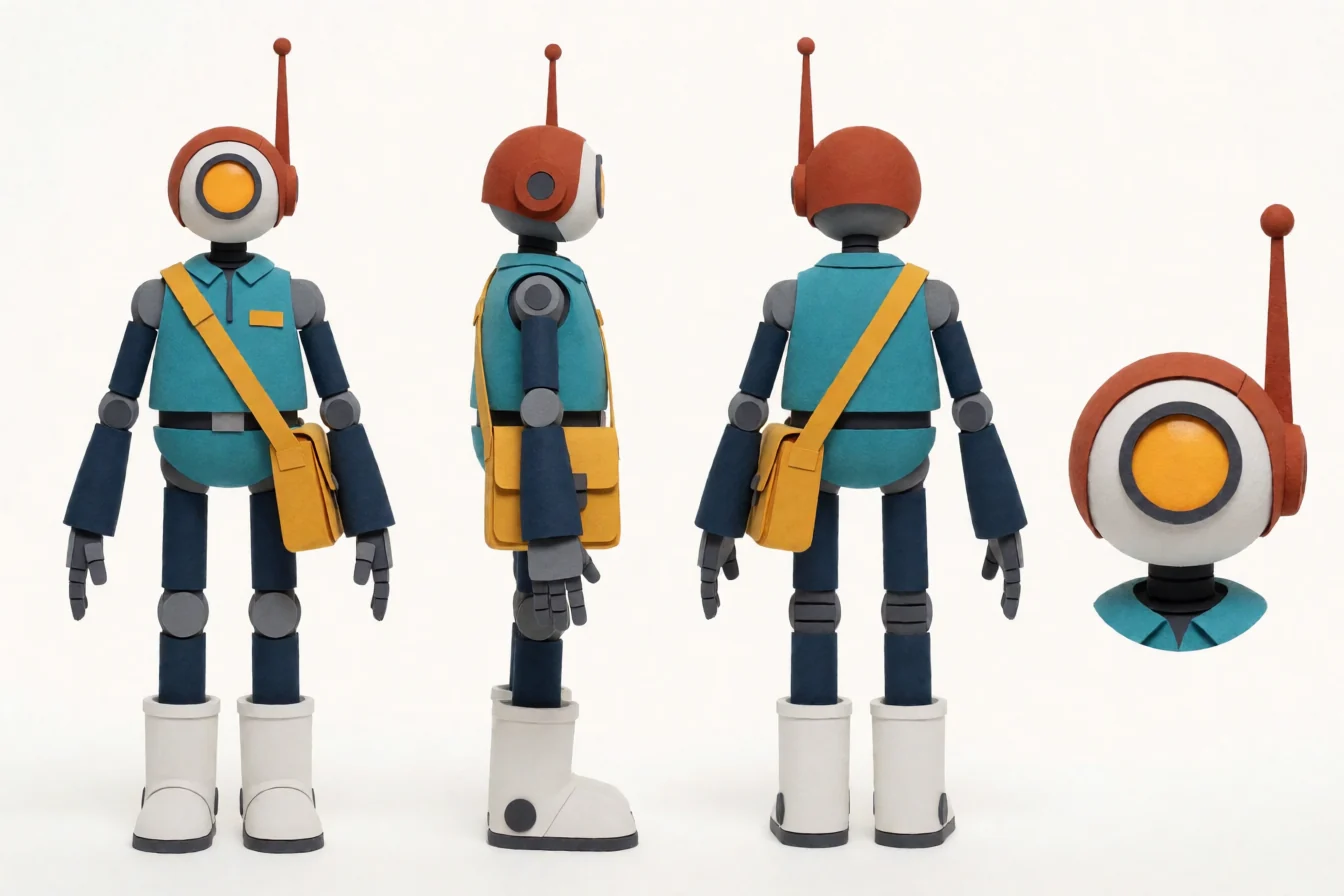
The turnaround shows details the rain hides. The boots flare at the soles. The satchel strap crosses the jacket. The wrists are narrow enough for the hands to read as separate pieces. Those shapes guided the Blender model and its moving joints.
In Unity, a fiber texture gives the coat its crossing grain. Thin layers and short strands catch the lamp along the silhouette. Under the satchel strap the fibers lie flatter, so the bag looks as though it has weight.
Give the courier somewhere to go
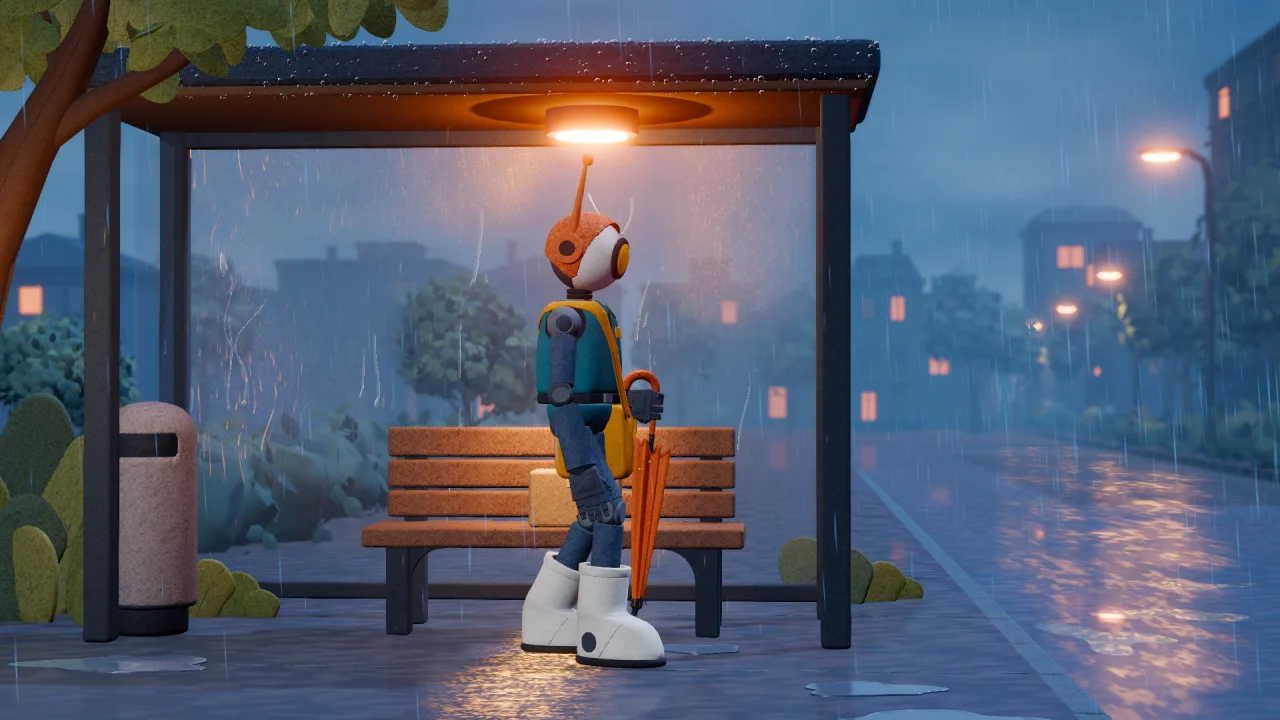
A click sends a ray from the camera into the street. A sidewalk hit becomes a destination on a map of walkable ground. A ripple marks the spot. On the first click, the courier closes the canopy, then turns its wrist until the tip points down. It carries the full-length umbrella in its left hand as it walks around the bench and shelter posts.
The glass, the rain, and the receding street lamps give depth to a short walk. A low-resolution mirror camera keeps the boots and umbrella reflected in the pavement as they move.
Let the shelter light spill
The Unity 6.6 scene used small lights to put warmth back onto the bench and canopy. In 6.7, Surface Cache GI lets nearby surfaces send some of that light back into the scene. Four fill lights came down by 10–23%.
Switch between the Mac builds and watch the underside of the umbrella and the bright strip of pavement. Screen-space reflections, contact shadows, and AgX tone mapping also contribute to the finished frame.
On an M5 Max at 1600 × 900, the Mac player averaged 263 FPS in 6.6 and 199 FPS in 6.7 over three runs each. The browser edition uses Unity’s lighter WebGL 2 renderer and keeps the pavement mirror.